How to Polish Gold in the Zargarsaaz Jewelry Making Course?
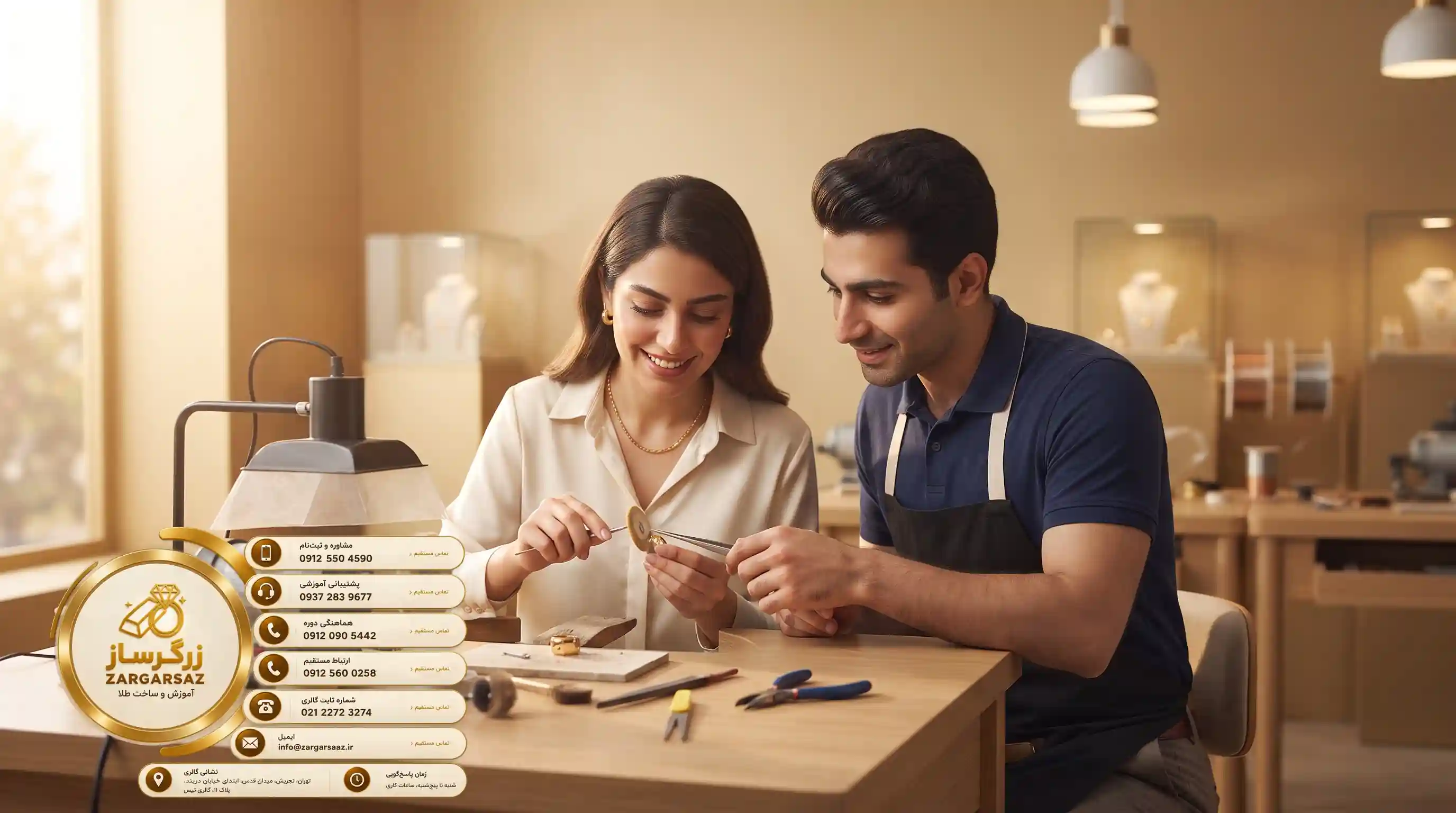
برچسبها: How to Polish Gold in the Zargarsaaz Jewelry Making Course?
The Importance of Gold Polishing in the Final Quality of Jewelry
Gold polishing is one of the most delicate and exciting stages of jewelry making, bringing a dazzling shine and brilliance to lifeless, matte metal pieces. When a jeweler melts, rolls, saws, and welds a piece, the metal surface becomes covered with tiny scratches, oxide stains, and microscopic imperfections. This is where the skill of finishing and polishing shows its true value. If you are interested in learning this art fundamentally and professionally, you can explore How to Learn Jewelry Making in the Zargarsaaz Jewelry Course? and start your professional journey.
In the Zargarsaaz jewelry course, students learn how to achieve the highest level of brightness on gold without compromising the original weight of the piece or reducing its purity. Gold is a soft and flexible metal, and a mistake in hand pressure or incorrect abrasive materials can ruin hours of hard work.
The Key Role of Finishing in Jewelry Valuation
A professional jeweler knows that a shop window without polished and sparkling jewelry holds no appeal for customers. The reflection of light off the polished surface of gold is what captures every viewer's eye. Furthermore, alongside mastering polishing methods, a precise understanding of precious metal purity is extremely important, the details of which you can read in the article How to Learn Purity Testing in the Zargarsaaz Jewelry Course?.
- Removing lines caused by cutting tools and filing
- Preparing the metal surface for gold electroplating stages (yellow, white, or rose gold)
- Increasing the visual and commercial value of the gold piece during sale
- Eliminating surface defects and microscopic structural pores
Through continuous practice in well-equipped workshops, every student will be able to turn the most delicate bangles, rings, and chains into flawless mirrors.
Getting Familiar with Essential Finishing Machines and Supplies
To achieve a flawless polish, specialized and standard tools are required. The polishing motor (or finishing motor) is considered the beating heart of any jewelry workshop. These motors feature variable rotation speeds, allowing students to use the appropriate speed depending on the type and thickness of the piece. In the Zargarsaaz jewelry course, all of this industrial equipment is provided to trainees for hands-on experience so they can become familiar with a real working environment.
Brushes, wheels, felts, and finishing balls are other inseparable parts of this process. Each of these tools has its own specific application, which is reviewed separately below:
| Tool Name | Material and Structure | Main Application in Gold Polishing |
|---|---|---|
| Wire Brush | Soft brass or steel fibers | Removing initial oxide stains and cleaning joints |
| Polishing Felt | Dense compressed wool | Used with green or white compound for final smoothing |
| Cotton Wheel (Buff) | Sewn fabric layers | Creating exceptional brilliance and achieving a mirror-like gold surface |
| Graphite and Rubber Burs | Soft silicon carbide | Working around settings and prongs of delicate jewelry |
Using safety equipment such as protective goggles, dust masks, and special gloves is also part of workshop safety principles, which are heavily emphasized at Zargarsaaz to ensure the health of dear students is always protected.

Understanding Green, White, and Red (Jeweler's Rouge) Compounds
One of the secrets to having a brilliantly shining piece of gold is selecting the right abrasive materials and polishing compounds. These compounds are a blend of industrial fats and very fine mineral particles or metal oxides that are applied to felt or cotton wheels, erasing scratches through rotational friction. In the Zargarsaaz jewelry course, trainees work empirically with all of these materials.
The compounds used in the jewelry industry are generally divided into several main categories:
- Red Compound (Jeweler's Rouge): Features a very fine grit for final finishing and creating deep brilliance on yellow and colored gold.
- Green Compound: The most widely used compound for removing medium scratches and creating a smooth, polished surface prior to final finishing.
- White Compound: Mostly used for white metals such as platinum and white gold to preserve the silver and cool hue of the metal.
A very important point when working with compounds is controlling the heat generated by friction. If the motor speed is too high or hand pressure is excessive, the gold will heat up and may damage stone settings or burn the compound onto the piece.
"The art of polishing is precisely like cutting a diamond; patience, precision, and the right tools create the final masterpiece."
By learning these techniques alongside creating innovative jewelry ideas, you can be sure to produce flawless products that can compete with major brands.
How to Turn a Rough Piece into a Shining Jewel?
The gold polishing process in professional workshops is carried out in stages using various abrasive grits. The first step is to inspect the piece under a loupe or workshop microscope to identify the depth of scratches. If the piece has deep lines, the surface must first be leveled using hand files or specialized paper pads (wet and dry sanding). After that, the main finishing stages begin with the polishing motor.
To better understand the workflow, the table below illustrates the operational steps in detail:
| Stage | Operation Name | Tools and Consumables | Purpose of This Stage |
|---|---|---|---|
| 1 | Initial Stock Removal | Needle files and coarse sandpaper | Removing casting waste and smoothing sharp edges |
| 2 | Rough Finishing (Pre-Polish) | Hair brush and green compound | Erasing sandpaper marks and initial surface preparation |
| 3 | Medium Finishing | Compressed felt and standard compound | Smoothing and closing micro-pores in the metal |
| 4 | Final Polishing (Mirror Finish) | Soft cotton wheel and rouge (red) compound | Creating the highest level of light reflection and dazzling brilliance |
After completing these steps, the piece enters the specialized cleaning stage using an ultrasonic machine to completely wash away grease and residual compound particles from the pores of the gold, making it ready to display in the shop window. These practical skills will guarantee your success in the job market.
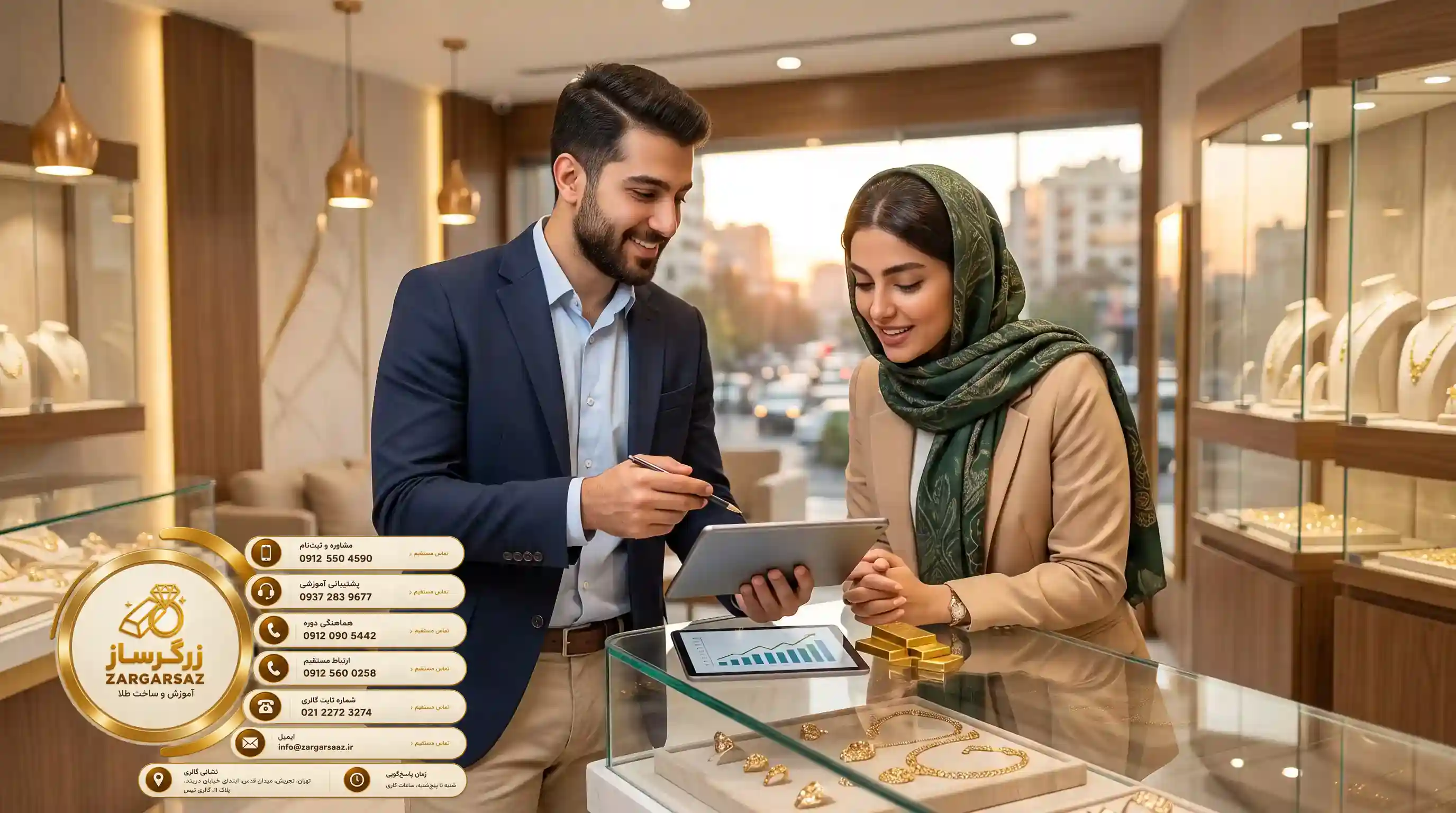
Preventing Gold Loss and Reducing Piece Weight
One of the biggest challenges for novice jewelers during polishing is the unintended loss of gold weight (referred to as losing gold to filings). Tiny particles of gold mix with compound dust during polishing and are collected in the workshop's vacuum bags (known as gold sweepings), but excessive weight loss can reduce profit margins. In How to Build Your Jewelry Idea in the Zargarsaaz Jewelry Course?, you learn how to minimize material waste through precise techniques.
Some common errors and their specialized solutions include:
- Overheating the piece: Resolved by using proper coolants or reducing hand pressure on the felt wheel.
- Creating wavy patterns on the gold surface: Caused by holding the piece stationary in one spot on the motor; the piece must always be kept moving gently.
- Breaking stone prongs: In gemstone jewelry, very soft and specialized brushes must be used to avoid damaging the stone settings.
Adhering to these minor empirical tips is what turns a simple trainee into a skilled and trusted master craftsman in the gold market. The continuous support of the Zargarsaaz team will back you up throughout all these stages.
How to Own a Jewelry Shop Without Initial Capital?
Learning the art of polishing and jewelry making is only half the journey to success. The main challenge for motivated youth is having sufficient capital to rent a shop, purchase decor, equip a workshop, and fill display windows with gold. This is where the fundamental difference between the Zargarsaaz collection and other institutes becomes evident. We do not just teach skills; we secure your career future.
After successfully completing the courses, your business setup process takes shape with our full support:
- Sourcing, renovating, and fully equipping a jewelry shop unit
- Providing initial capital and filling display windows with high-quality, polished jewelry
- Setting up completely transparent contracts and benefiting from reputable insurance policies
- Fairly dividing sales profits and establishing a genuine partnership without financial worries
If you are ready to transform your professional life and own an independent business without needing billions in capital, join the great Zargarsaaz family today and build your future with confidence.
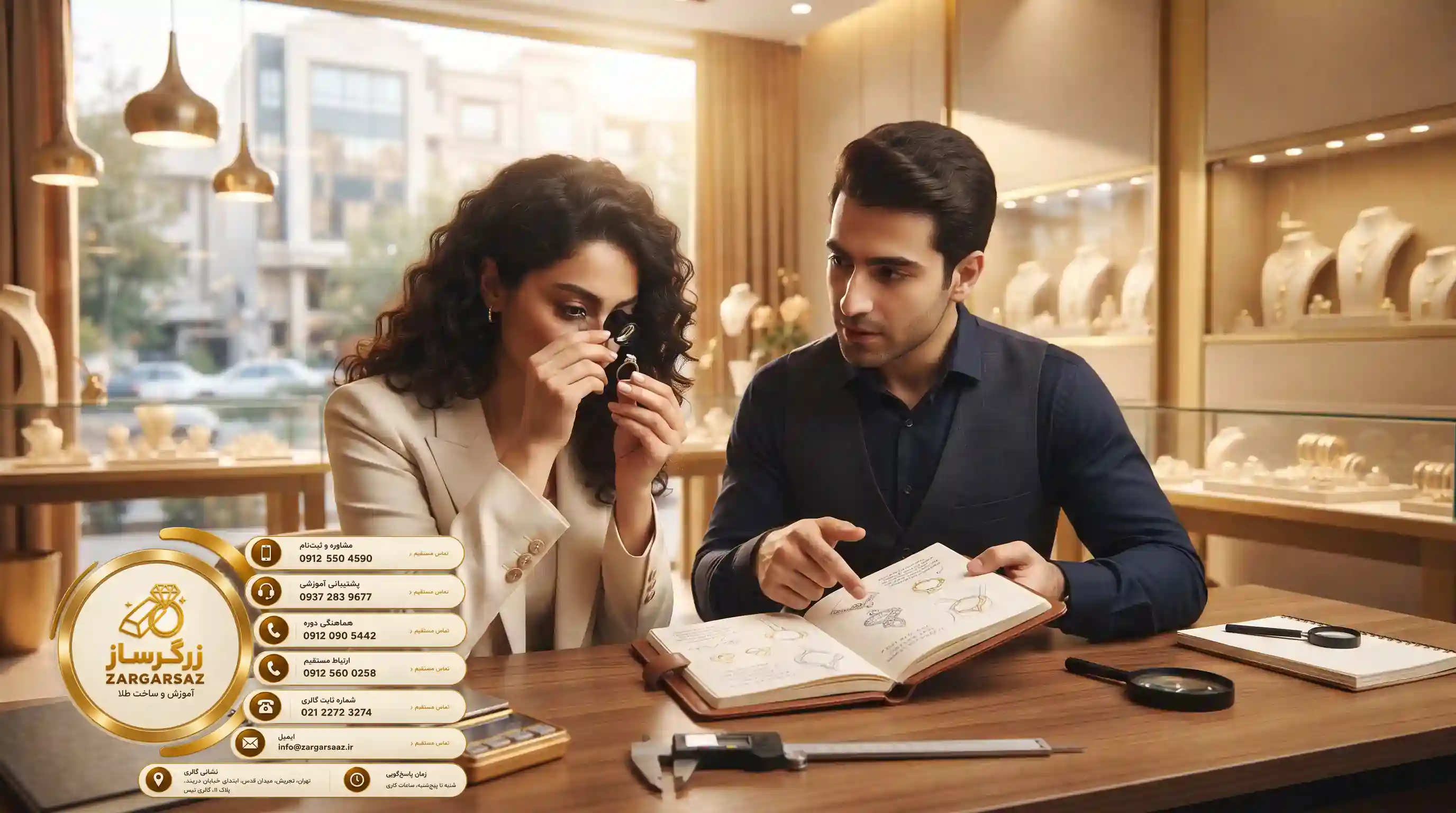
| Frequently Asked Question | Specialized Answer |
|---|---|
| 1. Is prior experience required to enroll in the Zargarsaaz jewelry course? | No, all courses are taught completely hands-on from scratch (beginner to advanced). |
| 2. How long does it take to learn the gold polishing process? | Through practical workshop exercises, students gain complete mastery of polishing and finishing techniques during the course. |
| 3. Will we really be handed a jewelry shop after the course? | Yes, after the course concludes, the Zargarsaaz team equips the shop, fills the window with gold, and you will become our business partner. |
| 4. Do we need initial capital to set up the shop? | No, not a single rial of initial capital is needed, and all equipment and gold supply costs are covered by the collection. |
| 5. What is the difference between green and red compound in gold polishing? | Green compound is used for medium finishing, while red (rouge) compound is used for final finishing and creating a mirror-like shine. |
| 6. How can gold weight loss be prevented during polishing? | It is taught by master craftsmen through the use of standard tools, motor speed control, and appropriate hand pressure. |
| 7. Is a valid certificate awarded at the end of the course? | Yes, a valid skill certificate is awarded to our dear students. |
| 8. How are the profits of the jewelry shop divided? | Sales profits are divided fairly between you and the collection based on transparent contracts. |
| 9. What is the application of the ultrasonic machine in jewelry making? | It is used for the final cleaning of gold pieces and removing compound particles and grease from tiny pores. |
| 10. How can we register for the Zargarsaaz jewelry course? | You can obtain complete information and register by visiting the official website of the collection at https://zargarsaaz.ir/. |
Specialized reference for jewelry training and independent business startup, Zargarsaaz (https://zargarsaaz.ir/)